Important: This site is for informational purposes only. Nothing here constitutes diving instruction or professional safety advice. Always dive within your training certification level. | Last Updated: June 2026
โš  Overhead Environment Safety Notice: The DPVs on this page are intended for divers holding overhead environment certification (TDI Cave Diver, GUE Cave 1/2, NSS-CDS, or equivalent) and a dedicated DPV cave course. Operating a cave diving DPV without this training is a life-threatening activity.
Direct Answer

The best cave diving DPV must be aluminium or carbon-fibre, field-serviceable, and rated beyond recreational depth limits โ€” plastic scooters are not safe for overhead environments. For 2026, three platforms stand out: the Dive Xtras BlackTip is the most affordable entry point, the Suex XK1 is the European reliability benchmark, and the Seacraft Ghost is the exploration-grade all-rounder. Buying any of these requires full cave certification, and ideally a dedicated TDI, GUE, or NSS-CDS DPV cave course before you take one underwater.

Overhead Environment Requirements

What Makes a Cave Diving DPV Different

Recreational DPVs โ€” plastic sea scooters rated to 30โ€“40 metres โ€” are built for casual reef use, not overhead environments. Their pressure housings are not designed for the repeated pressure cycling of cave diving, their runtimes are too short for real penetration distances, and they cannot be serviced in the field if a seal or propeller fails mid-dive. A flooded housing or a jammed prop on a recreational scooter is an inconvenience on a reef dive; in a cave, it can be life-threatening.

Four criteria separate a true cave diving DPV from a recreational sea scooter: aluminium or carbon-fibre construction able to withstand repeated pressure cycling; a depth rating of 100 metres or more, regardless of your planned dive depth; field-serviceable seals, propellers, and battery packs that can be repaired between dives without factory support; and an emergency bypass or redundant drive system that keeps the scooter moving if the primary electronics fail.

If your DPV is plastic, rated to 40 metres, or requires factory service for a prop change โ€” it is not a cave diving DPV. For divers weighing up their first overhead-environment platform, the best underwater scooter for cave diving is one that meets all four criteria, not just the cheapest one with the right paint job. For background on how DPVs work across all diving disciplines, see our diver propulsion vehicle guide. If you are shopping for a recreational or mid-range model instead, see our complete DPV comparison.

Cave / Technical The Shortlist

Best DPVs for Cave Diving: 3 Models Compared

Direct Answer

The Dive Xtras BlackTip, Suex XK1, and Seacraft Ghost are the three platforms that meet the construction, depth rating, and field-serviceability bar for cave diving. All three are aluminium or carbon-fibre, rated to 100m or more, and built to be serviced between dives rather than returned to the factory.

Dive Xtras BlackTip โ€” Best Entry-Level Cave DPV

Dive Xtras BlackTip DPV
Dive Xtras
BlackTip
โญ Best Entry-Level Cave DPV
  • Max Depth100 m (Tech / Exploration)
  • Run TimeUp to 180 min
  • BodyAluminium / Carbon Fibre
  • BatteryDeWalt 9Ah / 12Ah packs
  • DesignModular 3-piece transport
  • Approx. Price$1,500โ€“$2,000

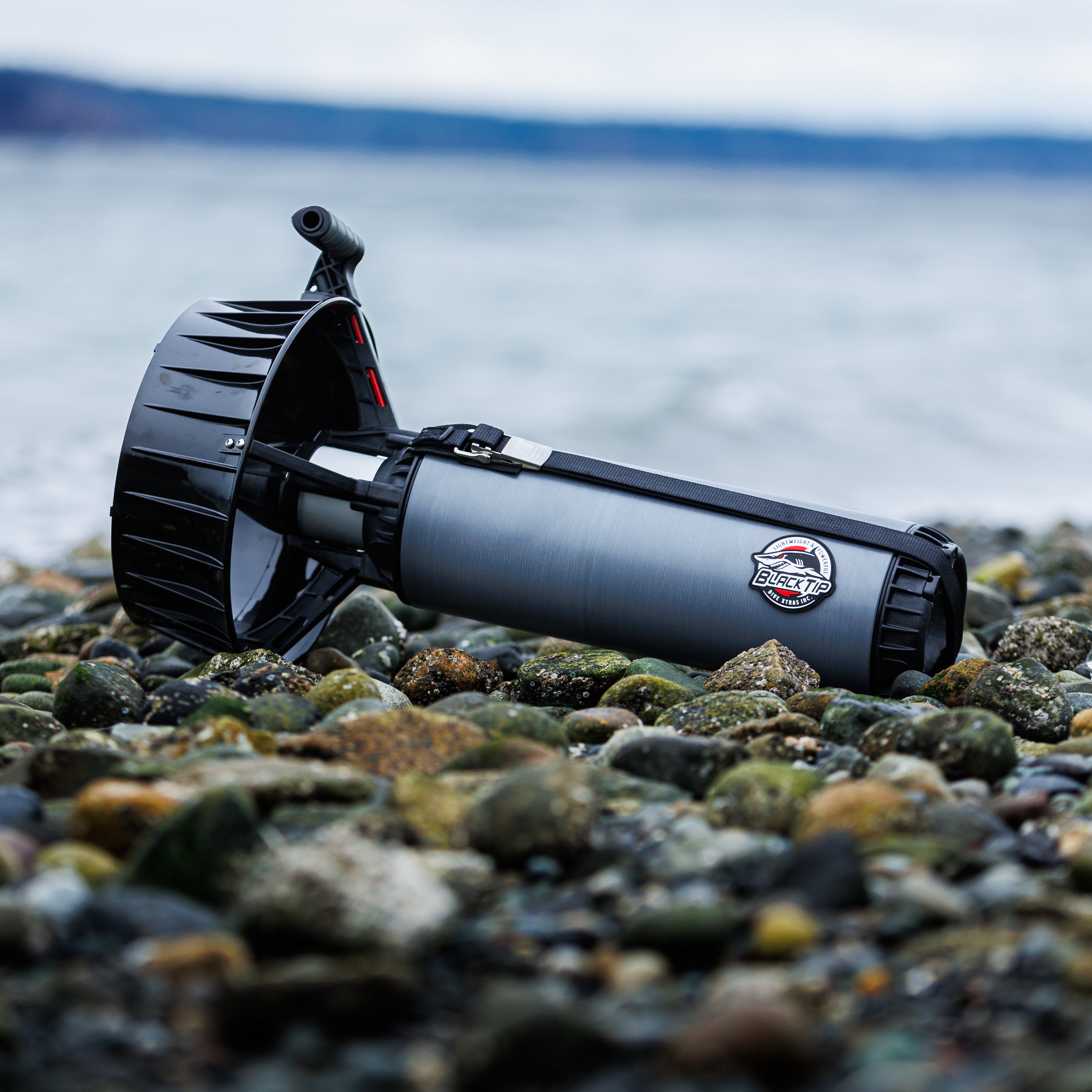
The Dive Xtras BlackTip is the most accessible true cave diving DPV on the market, priced around $1,500โ€“$2,000 depending on configuration. It runs on off-the-shelf DeWalt 9Ah or 12Ah power tool battery packs โ€” a major advantage for field serviceability and replacement cost. The Tech and Exploration models are depth rated to 100 metres and built in a modular three-piece design that breaks down for travel, with field-serviceable seals, propellers, and battery compartments. The standard Travel model trims nose-up and suits recreational use better than cave work โ€” choose the Tech or Exploration variant for overhead environments. At penetrations beyond roughly 3,500 feet, 9Ah batteries may run short; budget for the 12Ah option or a larger scooter for longer dives.

Visit Dive Xtras No affiliate programme currently available. Direct manufacturer link.

Suex XK1 โ€” Best Cave DPV for European Divers

Suex XK1 DPV underwater scooter
Suex
XK1
โญ Best for European Cave Divers
  • Max Depth100 m
  • Run Time210+ min
  • BodyAnodised Aluminium
  • Emergency BypassStandard
  • AccessoriesEron-D monitor, Synapsi nav cone
  • Approx. Price$5,000โ€“$7,000+

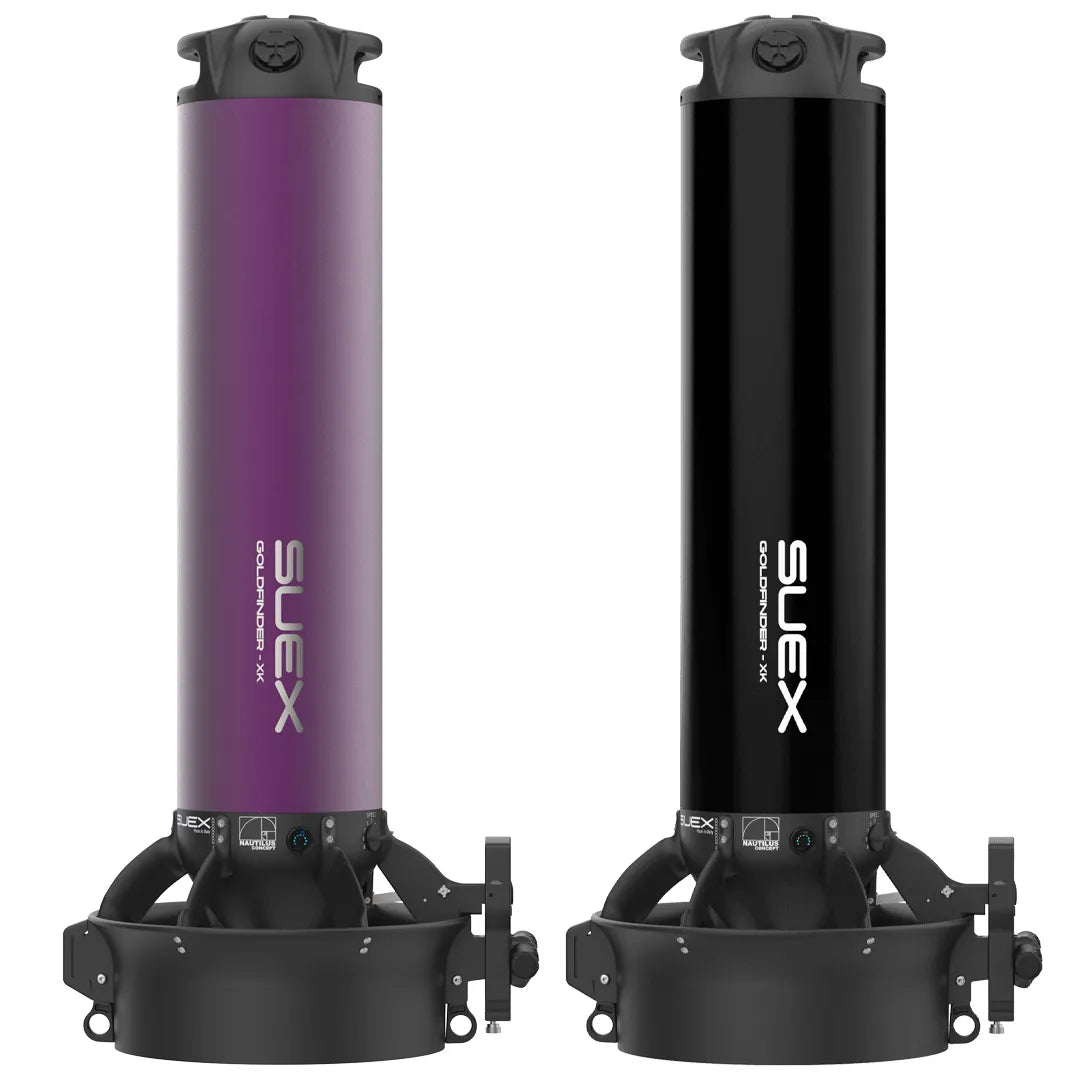
The Suex XK1 (also sold as the XK Goldfinder) is Suex's flagship scooter and a familiar sight in European cave systems. Built from anodised aluminium and rated to 100 metres, it delivers 210 minutes or more of runtime per charge and includes an emergency bypass switch as standard โ€” keeping the drive running if the primary electronics fail. Optional accessories include the Eron-D battery monitor and the Synapsi navigation nose cone, both popular with GUE-trained cave divers. Expect to pay $5,000โ€“$7,000 or more depending on configuration. The XK1 is a serious investment, but its build quality and bypass redundancy make it a benchmark choice for divers training and diving in European cave systems.

Visit Suex No affiliate programme currently available. Direct manufacturer link.

Seacraft Ghost โ€” Best All-Round Exploration DPV

Seacraft Ghost DPV
Seacraft
Ghost
Premium Exploration
  • Max Depth150 m
  • Run TimeUp to 240+ min (battery dependent)
  • BodyCarbon Fibre / Aluminium
  • DriveDirect-drive brushless, no shaft seals
  • Emergency BypassYes (seal-less direct drive)
  • Approx. Price$5,000โ€“$8,000+

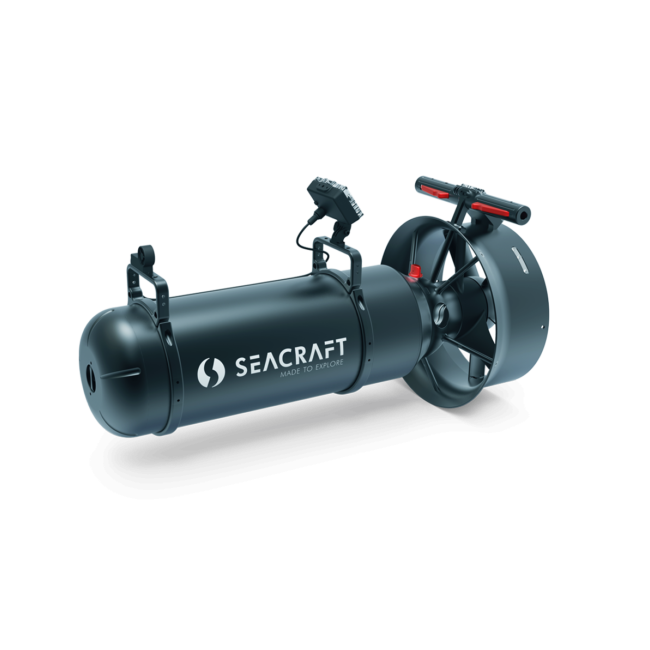
The Seacraft Ghost uses a patented brushless motor that operates directly in water, eliminating the shaft seals found on most other DPVs โ€” and with them, the single most common failure point on a cave scooter. Built from carbon-fibre and aluminium and rated to 150 metres, the Ghost has been used on world-record cave penetrations and is trusted by exploration teams worldwide. Runtime depends on battery configuration, with options extending well beyond four hours on extended packs. Pricing typically runs $5,000โ€“$8,000 or more. For divers planning serious exploration-grade penetrations, the Ghost's reliability advantage from its seal-less drive is difficult to match.

Visit Seacraft No affiliate programme currently available. Direct manufacturer link.
Full Comparison

Cave DPV Specifications Side by Side

Direct Answer

The BlackTip is the budget entry point, the XK1 is the European all-rounder, and the Ghost is the exploration-grade flagship. All three meet the bar for a best cave diving DPV: field-serviceable construction, depth ratings of 100m or more, and aluminium or carbon-fibre builds.

Model Construction Depth Rating Runtime (cruise) Field-Serviceable Emergency Bypass Approx. Price
BlackTip (Tech / Exploration) Aluminium / Carbon Fibre 100 m Up to 180 min Yes No (standard) $1,500โ€“$2,000
Suex XK1 Anodised Aluminium 100 m 210+ min Yes Yes (standard) $5,000โ€“$7,000+
Seacraft Ghost Carbon Fibre / Aluminium 150 m 240+ min (battery dependent) Yes Yes (seal-less direct drive) $5,000โ€“$8,000+
Training Pathway

Certification You Need Before Buying a Cave DPV

A cave diving DPV is not an entry-level purchase, and no reputable dealer will sell you one without confirming your certification. The prerequisite chain runs: Open Water โ†’ Advanced Open Water โ†’ Cavern โ†’ Intro to Cave โ†’ Full Cave (a minimum of 50 logged cave dives) โ†’ DPV Cave course.

Three agencies offer recognised DPV cave certifications: TDI's DPV Cave Diver course, GUE's DPV Cave course, and the NSS-CDS DPV Cave Diver programme. All three follow a similar structure โ€” typically 3โ€“5 days and a minimum of 3โ€“5 dives โ€” covering scooter handling, emergency procedures, team protocols, and navigation with a DPV in an overhead environment.

A DPV does not make you a cave diver. You must be a competent cave diver first โ€” the DPV adds range to existing skills, it does not substitute for them. Skipping straight to a DPV cave course without solid fundamentals in line work, gas management, and team procedures is a recipe for an incident, not an adventure.

For the full certification pathway including recreational DPV training, see our DPV diving and certification guide.

Emergency Procedures

DPV Failure in a Cave: Gas Planning and Emergency Protocols

A DPV can carry a diver thousands of feet into a cave system in a matter of minutes โ€” distances that could take hours to swim back on fins alone if the scooter fails. This single fact reshapes gas planning for DPV cave dives.

The standard rule of thirds is modified for scootering: on a dive with a single DPV, turn the dive once you have used enough gas that you still have at least twice the amount needed to swim out unaided. On dives with multiple DPVs, turn once you have at least twice the gas needed to exit on a working scooter.

Backup scooters are part of the plan, not an afterthought. Teams of two typically carry two spare scooters between them; teams of three often carry one spare. Beyond roughly 3,000 feet of penetration, or past 120 feet of depth, a spare scooter becomes mandatory rather than optional.

Common failure modes include battery depletion, propeller entanglement in line or debris, trigger mechanism damage, and electronics flooding. Higher-end cave DPVs from Suex, Seacraft, and SubGravity/Bonex include emergency bypass switches that keep the drive running through certain electronic failures โ€” a feature worth the premium when your exit depends on it.

Frequently Asked Questions

Do I need a backup DPV for cave diving?

For short penetrations within comfortable swimming distance, a buddy tow may be sufficient if your primary scooter fails. Beyond roughly 3,000 feet of penetration or 120 feet of depth, a spare scooter becomes mandatory rather than optional โ€” most cave DPV courses teach both buddy-tow procedures and team backup-scooter protocols as part of the curriculum.

How far can a DPV take you into a cave?

A Dive Xtras BlackTip running on a 12Ah battery at roughly 150 feet per minute can give you a working range of around 4,500 feet with a reserve held back for the exit. Higher-end platforms like the Suex XK1 or Seacraft Ghost, combined with staged gas and backup scooters, support penetrations on the kilometre scale used by exploration teams.

Why do some cave sites ban DPVs?

DPVs can disturb silt and cause environmental damage to fragile cave formations if operated carelessly, and high prop wash in a narrow passage can degrade visibility for the whole team. Many Florida springs and Mexican cenote operators require proof of DPV cave certification before permitting scooter use, and divers are expected to match their speed and prop wash to the size of the passage they are in.

How do you maintain buoyancy and trim with a DPV in a cave?

A DPV shifts your centre of gravity and adds drag, so trim should be set neutral to very slightly head-down or feet-up depending on the scooter's mounting, then adjusted as the dive progresses. As battery weight decreases through the dive, buoyancy will shift slightly and may need small adjustments. DPV cave courses spend significant time on trim and buoyancy drills specifically because poor trim while scootering increases silt-out risk in tight passages.

Need a Recreational or Mid-Range DPV Instead?

See our complete comparison of budget sea scooters, mid-range DPVs, and technical platforms โ€” with full spec tables, prices, and buy links.

See the Full DPV Comparison โ†’

Independent editorial. See footer for our informational and accuracy disclosures.